

CPEC enters the next phase
THE two-day Joint Cooperation Committee (JCC) meeting of the China-Pakistan Economic Corridor (CPEC) sets the stage for the second phase of the multibillion-dollar cooperation between the two nations.
It attempts to formalise the future roadmap for industrial and economic collaboration involving special economic zones along the CPEC stretch in Pakistan and adopt a Long Term Plan (LTP) 2030.
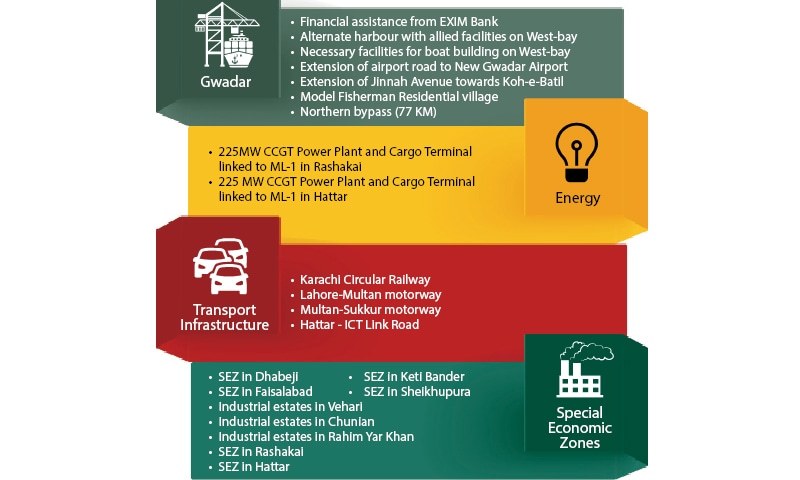
The main focus of the seventh JCC will remain special economic/industrial zones even though all the five joint working groups (JWGs) — Gwadar, energy, transport infrastructure, special economic zones and planning — would meet on the first day (today) to remove any irritant and suggest the way forward.
The JWGs comprise secretary-level officials of the two countries. The new projects, mostly small to medium size, will be finalised by these groups for inclusion in the overall portfolio.
Even though Pakistan had originally lobbied for its financing, it has already been settled in recent interactions that the $14 billion Diamer-Bhasha Dam would not be made part of the CPEC because of unacceptable demands from Beijing for the transfer of its ownership.
The key projects expected to formally become part of the CPEC are $8bn Main Line-I (the 1,875km railway line from Karachi to Lahore to Peshawar) and $3.5bn Karachi Circular Railway. The financial appraisal of these new projects has been completed and their future course of action will be approved.
On the second day, the JCC — led from the Chinese side by vice-chairman of the National Development and Reforms Commission (NDRC) and from the Pakistani by Minister for Planning Development and Reform Ahsan Iqbal — will meet all the four chief ministers, heads of regional governments and the Federation of Pakistan Chambers of Commerce and Industry.
Share story


0 comments: