Learning from Livey

When Livey arrived at Animal Friends more than 2 years ago, she began to earn a reputation. This beautiful cat with gorgeous green eyes and long gray fur was the subject of many rumors: “she is moody,” “she won’t sit on your lap,” “she only likes men,” “she hisses and swats if you try to pet her.” While there was some truth to these stories, Livey wasn’t a bad cat … she was simply misunderstood.
 
In February, Animal Friends began participating in Jackson Galaxy’s Cat Pawsitive initiative which was developed to reduce stress in cats who are overwhelmed by a shelter environment. The program works by associating positive behaviors with a clicking sound followed by a reward such as a treat or affection. But since Livey showed little interested in attention or treats, it was difficult to reward her for friendly interactions.
Those who knew her best saw the potential for Livey to grow into a friendly and outgoing cat, she just needed to be given the right opportunity. So, Livey was moved to a small free-roam room where she could seek attention on her own terms. If she chose to interact with guests, she was offered a click and a reward. The choice to interact with people was completely hers. Over time, Livey learned to enjoy being petted, having her ears scratched and even curling up on a lap for a cuddle.
 
Livey taught us that animals communicate their fears to us in different ways, but we don’t always understand. Once we understood what Livey had been telling us, her transformation began. And, now there is more truth to the rumors you hear about this sweet girl: “she greets visitors at the door,” “she’ll curl up and knead your lap,” “she likes hanging out with her female friends,” “she’ll give you a little head butt when she’s ready to be petted.”

Now, the only thing Livey needs is a loving family to call her own.

0 comments:

Funny laughing animals


0 comments:

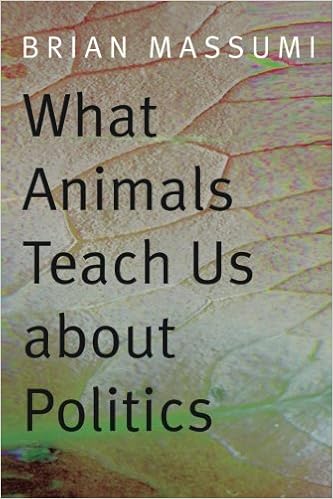
What Animals Teach Us about Politics

In What Animals Teach Us about Politics, Brian Massumi takes up the question of "the animal." By treating the human as animal, he develops a concept of an animal politics. His is not a human politics of the animal, but an integrally animal politics, freed from connotations of the "primitive" state of nature and the accompanying presuppositions about instinct permeating modern thought. Massumi integrates notions marginalized by the dominant currents in evolutionary biology, animal behavior, and philosophy—notions such as play, sympathy, and creativity—into the concept of nature. As he does so, his inquiry necessarily expands, encompassing not only animal behavior but also animal thought and its distance from, or proximity to, those capacities over which human animals claim a monopoly: language and reflexive consciousness. For Massumi, humans and animals exist on a continuum. Understanding that continuum, while accounting for difference, requires a new logic of "mutual inclusion." Massumi finds the conceptual resources for this logic in the work of thinkers including Gregory Bateson, Henri Bergson, Gilbert Simondon, and Raymond Ruyer. This concise book intervenes in Deleuze studies, posthumanism, and animal studies, as well as areas of study as wide-ranging as affect theory, aesthetics, embodied cognition, political theory, process philosophy, the theory of play, and the thought of Alfred North Whitehead.

0 comments:

Critical Animal Geographies

Critical Animal Geographies provides new geographical perspectives on critical animal studies, exploring the spatial, political, and ethical dimensions of animals’ lived experience and human-animal encounter. It works toward a more radical politics and theory directed at the shifting boundary between human and animal. Chapters draw together feminist, political-economic, post-humanist, anarchist, post-colonial, and critical race literatures with original case studies in order to see how efforts by some humans to control and order life – human and not – violate, constrain, and impinge upon others. Central to all chapters is a commitment to grappling with the stakes – violence, death, life, autonomy – of human-animal encounters. Equally, the work in the collection addresses head-on the dominant forces shaping and dependent on these encounters: capitalism, racism, colonialism, and so on. In doing so, the book pushes readers to confront how human-animal relations are mixed up with overlapping axes of power and exploitation, including gender, race, class, and species.
Critical Animal Geographies: Politics, Intersections and Hierarchies in a Multispecies World (Hardback) book cover

0 comments:

Feed your Critical Animal in 2015

Don't Miss These Provocative Books in 2015.

Outlined below is the fourth annual Animal Reading List. This follows 2012's exciting lineup of books challenging conventional approaches to animal ethics and advocacy, 2013's posthuman bonanza, and 2014's expanse of critical animal theory, interspecies relationships, and effective advocacy for animals.

2015 has yet to prove itself to be as fruitful as the last few in regards to critical animal studies. Does this mean "the animal turn" has been but a five year trend in scholarship or that many 2015 books are yet to be announced? It's hard to tell, but there is so much material from 2014 that you'll be too preoccupied with good reads to really notice any lag. 

1 comments:

Try these food swaps to cut down calories by half

To cut down on kilos, we must cut down on calories. And in this pursuit of ours, we never want to end up hangry (hungry and angry). So, one thing we must understand is that cutting down calories is not synonymous to not eating what you love. There’s always a way out that’s healthier and less calorie-laden and is quite similar in taste. If you are a weight watcher who often browses online on ways to cut calories off your diet, you must know how muesli is better than paranthas or how fresh fruit salad is better than packed juices. But if you belong to the league of those who still love their pizzas or butters and can’t do without them, here’s how you need to go about your calorie cutting.
Also, you need to understand that you do not have to cut down any calories. You have to cut them down from your processed food intake. Foods like chips, soda, tomato ketchup and sweetened coffee give you ‘empty calories’, that is, calories without nutrition. What you need is replacing them with foods that are less processed, thusly, less calories-dense.
What follows is a list of diet swaps that will not affect the taste of your food but will cut down your calories by at least a half (in most of them). All of the following are calories per 100 grams of serving.

0 comments:

Eat green foods and you will see these changes in your body

There is a reason you are asked to have a colourful plate of food. 


It is because it is loaded with essential nutrients and minerals. Be it yellow or red, nature has found a clever way to add nutrition to our daily diet. Now that we know how yellow and red foods can help us, it's time for nature’s next colour: green. Let's discover the different ways green foods are helping us.
Green foods are low in fat. Enriched with vitamins, they help in cutting unnecessary fat.

Green foods such as broccoli, cabbage, leafy greens and beans are fiber rich foods. This means good digestion and a healthy digestive tract.
Folic acid helps our body in producing and maintaining new cells. Green foods like peas, beans and asparagus are loaded with folic acid.


0 comments:

Should you really be eating every two hours?

As a health enthusiast, I often go through a lot of online studies on how to keep myself fit. Some tell me to eat my breakfast before 8 AM, while others say refrain from eating dinner after 7 PM. While I understand what works best for my body may not be the same for you or someone else, I still end up following a lot of such generic fads that keep going viral every sometime.

If you're like me, ready to follow any game plan to look your best, you must be following atleast a hundred social media pages on healthy food recipes, fitness anddieting tips, health experts and who not. One day, during my religious Facebook scrolling, I came across Dr. Luke Coutinho. One post caught my eye. It was about debunking a diet myth most of us have come to believe, thanks to Google, our friend - The post was about how eating three times a day is sufficient for our body and is enough to have an active metabolism, which may not be the case if you're following the popular theory of eating five times or perhaps seven times a day.

Now, when you've grown up in a household that talks about food the entire day, you are taken aback. Dr. Coutinho's theory hits that place where it hurts the most: my sceptic brain. You see, after all this while, after reading numerous books, watching channels, listening to nutritionists and dietitians talk about food, following them on my Instagram, Facebook, Twitter and what not, suddenly my self-trained-nutritionist side has many questions to ask.

So, I decide to mail Dr. Coutinho and ask him, "Why is it that everyone around me is on a five-meal plan then? Where will I get my protein from if I don't eat it as my snack? How will I look fabulous for a cousin's wedding by eating three calorie-dense meals?" And honestly, I am more concerned than curious. Dr. Coutinho has spoken about debunking myths, but for me, he has wasted my three-year long efforts' based conjecture and shocked a head full of information based on reading, listening and watching.

In my little research, I find out that I know Dr. Coutinho even before I saw his post on social media. He has written 'The Great Indian Diet' with celebrity and fitness enthusiast Shilpa Shetty and he is the mastermind behind the fitband I wear, Goqii.

So, following are the questions I emailed to him and the answers I got, even though the school of 'health' thought that I follow does not agree with this completely. Here's what his theory explains:

1. What is the ideal time to consume fruits and nuts, if not in between meals?

Fruits are best consumed on an empty stomach. Nuts and seeds, on the other hand, can be consumed between meals, specially when the gaps between main meals are long, for example the gap between lunch and dinner may be over 5-6 hours. Fruits and soaked nuts can also be consumed.

2. You often talk about the importance of bio-feedback. What does it exactly mean?


Bio- feedback is the feedback your body is constantly giving you when something is going wrong, for example, fatigue may be an indirect feedback related to the quality of your sleep, or could mean improper nutrition. Similarly, a white coated tongue could mean a toxic or unclean tummy; headaches and migraines could be related to constipation and so on.

3. You have spoken about calorie-dense foods. Could you please specify what comes under this category?

Pumpkin seeds, raw coconut oil, Moringa, all soaked nuts and seeds, green leafy veggies, dry fruits, etc. are examples of calorie dense foods.

4. You have spoken about how eating every two hours can harm our bodies. What about completing daily calorie requirement? For example, if a person is 90 kgs, how will they complete their calorie requirement with just three meals, if we go by the principle of 30 calories/kg?


We don't count calories. One must eat according to one's body size, goal, environment, work and health. Counting calories puts a blinder on the person and does not teach a person to listen to the body and mind. When physically hungry, eat, when not, don't eat. We can achieve this when we listen to our body attentively.


5. You post talks about how consumption of nuts every 2-3 hours can harm us as our body won't digest its proteins. Considering that a typical vegetarian Indian diet is low in protein, as the only sources of protein are milk, cottage cheese and pulses, how will they fulfill their protein requirement with just three meals? If the minimum requirement of protein is 1 gm/kg, how will they complete this protein deficiency?

There is no such thing as 1 gm/kg. That's very generic. More than protein, what is important for the body is amino acids, and how the body breaks down protein into amino acids. This is not about just three meals, if the gaps are longer between meals, which is normal in the Indian culture, one must have a snack every 3.5 to 4 hours. A Jain can get sufficient protein from a vegetarian diet without the need of supplements, it's about quality protein and not just quantity.

0 comments:

Here is how food affects your mood

We are what we eat! It impacts the way we think and feel. There is indeed a science that talks about this connection - it is called Nutritional psychiatry. A recent study confirmed that excess consumption of refined flours, sugar and salts is directly linked to mental health issues like depression and anxiety.

The connection between food and mood has also been written and proved in our ancient Ayurvedic texts, specifying how foods and its contents majorly affect how we feel. The correlation between Indian masalas, curries, herbs and our body is not new to Indian food science.

According to Harvard health publication, our brain functions the best when we provide it the best quality of foods. Just like how we provide premium fuel to our car, our body also deserves the best. Eating high quality foods packed with vitamins, minerals and antioxidants helps our brain and protects it from 'oxidative stress' according to the study. This means that the free radicals that our body produces when it uses oxygen, can in turn damage the cells.


Understanding that there lies a deep connection between the food we consume and our thinking process is still unknown to many. The term 'clean eating' is not limited to only delivering an ideal' body for you, this process is further linked to a healthier mental activity.

0 comments:

5 types of salts you should know about

A pinch of salt can make or break a dish. Without this key ingredient, our food remains unexciting and flavourless. Yet, it remains a controversial cooking component and is on many health experts' hit list. Here are some types of saltscommonly available and their nutritional value.


1. Iodised salt: 
The most common kind that is used, iodised salt, often known as the table salt, is the most easily available type of salt. This is because this form of salt gets easily dissolved in food. Deficiency of iodine leads to thyroid gland issues, hence, this salt is important but in measured quantities. According to WHO, iodine is essential for healthy brain development of children. The recommended consumption of iodine in adults over 18 years of age is 150 mcg everyday.


2. Kosher salt: Important for Jewish religion, Kosher salt is flaky and has longer grains. One major health benefit of this kind of salt is that it does not contain any additives like iodine. Once this gets dissolved in our food, its taste is not any different from regular salt. Using kosher salt to cut back on your sodium intake is recommended by many studies, as it can help prevent blood pressure and heart disease. As recommended by the U.S department of agriculture, consumption of kosher salt should be limited to below 2,300 mg everyday.

0 comments:

Should you really be eating every two hours?

As a health enthusiast, I often go through a lot of online studies on how to keep myself fit. Some tell me to eat my breakfast before 8 AM, while others say refrain from eating dinner after 7 PM. While I understand what works best for my body may not be the same for you or someone else, I still end up following a lot of such generic fads that keep going viral every sometime.


If you're like me, ready to follow any game plan to look your best, you must be following atleast a hundred social media pages on healthy food recipes, fitness anddieting tips, health experts and who not. One day, during my religious Facebook scrolling, I came across Dr. Luke Coutinho. One post caught my eye. It was about debunking a diet myth most of us have come to believe, thanks to Google, our friend - The post was about how eating three times a day is sufficient for our body and is enough to have an active metabolism, which may not be the case if you're following the popular theory of eating five times or perhaps seven times a day.

Now, when you've grown up in a household that talks about food the entire day, you are taken aback. Dr. Coutinho's theory hits that place where it hurts the most: my sceptic brain. You see, after all this while, after reading numerous books, watching channels, listening to nutritionists and dietitians talk about food, following them on my Instagram, Facebook, Twitter and what not, suddenly my self-trained-nutritionist side has many questions to ask.

So, I decide to mail Dr. Coutinho and ask him, "Why is it that everyone around me is on a five-meal plan then? Where will I get my protein from if I don't eat it as my snack? How will I look fabulous for a cousin's wedding by eating three calorie-dense meals?" And honestly, I am more concerned than curious. Dr. Coutinho has spoken about debunking myths, but for me, he has wasted my three-year long efforts' based conjecture and shocked a head full of information based on reading, listening and watching.

In my little research, I find out that I know Dr. Coutinho even before I saw his post on social media. He has written 'The Great Indian Diet' with celebrity and fitness enthusiast Shilpa Shetty and he is the mastermind behind the fitband I wear, Goqii.

So, following are the questions I emailed to him and the answers I got, even though the school of 'health' thought that I follow does not agree with this completely. Here's what his theory explains:

1. What is the ideal time to consume fruits and nuts, if not in between meals?

Fruits are best consumed on an empty stomach. Nuts and seeds, on the other hand, can be consumed between meals, specially when the gaps between main meals are long, for example the gap between lunch and dinner may be over 5-6 hours. Fruits and soaked nuts can also be consumed.

2. You often talk about the importance of bio-feedback. What does it exactly mean?


Bio- feedback is the feedback your body is constantly giving you when something is going wrong, for example, fatigue may be an indirect feedback related to the quality of your sleep, or could mean improper nutrition. Similarly, a white coated tongue could mean a toxic or unclean tummy; headaches and migraines could be related to constipation and so on.

3. You have spoken about calorie-dense foods. Could you please specify what comes under this category?

Pumpkin seeds, raw coconut oil, Moringa, all soaked nuts and seeds, green leafy veggies, dry fruits, etc. are examples of calorie dense foods.

4. You have spoken about how eating every two hours can harm our bodies. What about completing daily calorie requirement? For example, if a person is 90 kgs, how will they complete their calorie requirement with just three meals, if we go by the principle of 30 calories/kg?


We don't count calories. One must eat according to one's body size, goal, environment, work and health. Counting calories puts a blinder on the person and does not teach a person to listen to the body and mind. When physically hungry, eat, when not, don't eat. We can achieve this when we listen to our body attentively.


5. You post talks about how consumption of nuts every 2-3 hours can harm us as our body won't digest its proteins. Considering that a typical vegetarian Indian diet is low in protein, as the only sources of protein are milk, cottage cheese and pulses, how will they fulfill their protein requirement with just three meals? If the minimum requirement of protein is 1 gm/kg, how will they complete this protein deficiency?

There is no such thing as 1 gm/kg. That's very generic. More than protein, what is important for the body is amino acids, and how the body breaks down protein into amino acids. This is not about just three meals, if the gaps are longer between meals, which is normal in the Indian culture, one must have a snack every 3.5 to 4 hours. A Jain can get sufficient protein from a vegetarian diet without the need of supplements, it's about quality protein and not just quantity.

0 comments:

10 fruits and vegetables that keep you hydrated all day long

Seasons change and so do the veggies and fruits on our plate. Seasonal vegetables and fruits come for a reason. They fulfil the essential nutrients required by our body, like the summer fruits, berries and cucumbers that help in keeping our body well hydrated.
According to a study, there are some fruits and vegetables that may hydrate your body as effectively as a glass of water. We have listed such summer fruits and vegetables that keep the body hydration level intact.
Appropriately named, this fruit contains 92 per cent water. Other contents of the watermelon are magnesium and calcium that too help in rehydration. This summer staple food is also enriched with potassium, vitamin A and C.

0 comments:

Try these food swaps to cut down calories by half

To cut down on kilos, we must cut down on calories. And in this pursuit of ours, we never want to end up hangry (hungry and angry). So, one thing we must understand is that cutting down calories is not synonymous to not eating what you love. There’s always a way out that’s healthier and less calorie-laden and is quite similar in taste. If you are a weight watcher who often browses online on ways to cut calories off your diet, you must know how muesli is better than paranthas or how fresh fruit salad is better than packed juices. But if you belong to the league of those who still love their pizzas or butters and can’t do without them, here’s how you need to go about your calorie cutting.
Also, you need to understand that you do not have to cut down any calories. You have to cut them down from your processed food intake. Foods like chips, soda, tomato ketchup and sweetened coffee give you ‘empty calories’, that is, calories without nutrition. What you need is replacing them with foods that are less processed, thusly, less calories-dense.
What follows is a list of diet swaps that will not affect the taste of your food but will cut down your calories by at least a half (in most of them). All of the following are calories per 100 grams of serving.

0 comments:

9 types of khichdis to help you detox

As kids, we hated this pale meal that our mothers fed us when we were sick. Khichdi has always been received with a cringe. However, with the recent intervention of many diet ideologies, this Indian super food has made its way back to our list. Here are different khichdis which can help you detox with their added nutritional benefits.
Also known as kuttu in hindi, buckwheat is rich in fiber, high in proteins and vitamins. It is also loaded with minerals like magnesium, iron, zinc and copper. Buckwheat is known for lowering blood pressure, helping with cholesterol issues and is great for diabetics as the glycemic index of buckwheat is only 49. Buckwheat khichdi with ghee is a good start for your detox week.
Also known as Sago, sabudana is known for its anti-inflammatory properties which help in its easy digestion. This khichdi is usually made during navratras but can be savoured during your detox week as sago is pure carbohydrate, vitamin C, calcium and minerals. As it contains pure carbs and provides high energy, sago is used to break fasts.

0 comments:

Why everything you know about salt may be wrong

Have you ever been told that consuming more salt will make you thirstier? Well, it could be just an old wives' tale, say new studies by Russian cosmonauts.

So far we have known that if your salt, or sodium chloride, intake is high, you will get more thirsty and hence, drink more water. This will ultimately dilute your blood to maintain an adequate concentration of sodium. This will lead you to excreting the excess salt and water through urination. However, recent studies show that this theory may be completely wrong.


The experiment was conducted through the course of two separate space flight simulation studies where ten healthy men were given three salt intake levels (12, 9, or 6 g/d), while keeping all other dietary intakes constant. It concluded that eating more salt made the cosmonauts less thirsty and hungrier. Some subsequent experiments were also conducted on mice which showed how more salt intake burnt more calories, leading them to eat 25 per cent more to maintain their weight.


This new study has contradicted conventional wisdom. It is actually a result of a quest by a scientist Dr Jens Titze, now a kidney specialist in Germany. A similar study was conducted in 2006 which concluded that the more salt the cosmonauts ate, the more salt they excreted. This ensured that the sodium content in the blood remained constant while increasing their urine volume. But, as the salt intake increased, water intake reduced. So, the question that remained was from where was the excreted water coming?

0 comments: